

Biodiversity
Biodiversity
Biodiversity is the variety of all living things on our planet and how they evolve in their ecosystems. We need to preserve and enhance the natural capital of our planet to limit the loss of biodiversity. See below for examples of engagement on biodiversity.
Environmental Restoration
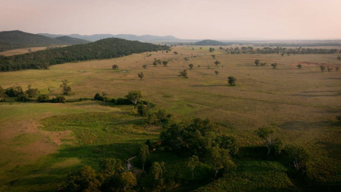
Through one of our Infrastructure portfolios, the Fund has an asset with environmental objectives to protect and restore biodiversity and ecosystems in areas affected by human activity.
This asset is an airport operator which has partnered with the Taronga Conservation Society Australia to support one of Australia's largest Box-Gum Woodland restoration initiatives. The project covers around 3,050 hectares in North-West New South Wales and aims to plant up to one million native seedlings, creating habitat for up to 36 threatened species.
A video walking through the partnership can be found here.
The partnership supports landscape-scale biodiversity restoration, climate resilience and community engagement, including collaboration with First Nation groups. You can learn more about the project here.
Asset Implementation Plans
In the property investment process, each asset in the acquisition process is required to include modelling to achieve net zero based on current performance and energy efficiencies. For any new lease, green clauses have been updated for increased collaboration with the landlord on environmental performances. We also have a standard list of building upgrades for general asset management consideration which are incorporated into ongoing ESG action plans for each property.
-

Through one of our property Fund Managers, solar photovoltaic (PV) panels have been installed at a DPD distribution warehouse in Hinckley. The PV system has been designed around DPD's existing operational and energy demand profile, with peak activity concentrated in the early morning and later afternoon, with lower utilisation during the middle of the day. This approach seeks to maximise the efficient use of on-site renewable energy while reflecting the building's current operating requirements.
Importantly, the design retains flexibility for future changes in occupational or energy requirements. Additional solar panels could be installed should electricity consumption increase or a future occupier have a higher energy demand. This provides scope for the sustainability characteristics of the asset to evolve alongside future operational requirements.
This project represents a positive example for NESPF of how investment in existing commercial assets can improve environmental performance, support the transition to a lower-carbon economy and strengthen the long-term sustainability of the portfolio.
Please see the video below for some key facts on the system:
-

On a new development, a green roof has been incorporated to the building. This is designed to enhance biodiversity by increasing habitats and absorbing rainwater which improves drainage.
-

Through our property fund manager, we are encouraging wildlife to thrive by making small changes that could have a big impact. Simple actions like putting up beehives with the honey collected and distributed to the tenants of the residential site, and installing bird and bat boxes to encourage native species, have been implemented.
-

One of our property fund managers aim to achieve at least 10% biodiversity net gain on property developments. This shows a healthy ecosystem and the impact on nature and biodiversity assessments are completed on developments. On buildings already standing where we have control, sites have been optimised for nature as much as possible.
Construction of another development resulted in a 12% net gain in biodiversity. This was achieved through incorporating wildflower grassland, semi-improved grassland, native scrub and native and ornamental hedgerows.
Offshore Windfarm
 Through one of our Infrastructure portfolios the Fund invests in an offshore wind farm in the Dutch part of the North Sea, on the border with Belgium.
The biodiversity of the construction site was assessed as the project commenced. The action taken was the release of 2,400 flat oyster tables. The oyster tables were placed on the base of some of the wind turbines in October 2020.
A team of researchers reviewed the oyster tables in 2023. The outcome being that in addition to the survival, presence and growth in oyster larvae, they also improve biodiversity. For this investigation they used E-DNA traces in the water and an underwater camera. The underwater videos showed a lot of life around the foundations with a total of 65 species found. The analysis showed the development of the species composition was still ongoing in a young wind farm. The outcome was that the researchers will return with the hope of seeing the oyster have settled in the shell layer and rock surrounding the wind turbine.
Further information on this project can be found here.
